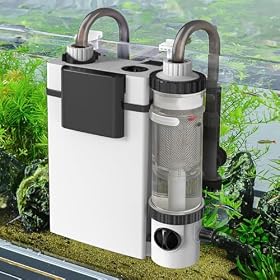
A DIY hang-on sponge can provide gentle, simple filtration if it is built around a reliable airlift. A ready-made HOB is usually easier to install and offers more room for different media. The better choice depends on your tank, livestock, and willingness to build and maintain the setup.
DIY hang-on sponge versus buying a HOB
A DIY hang-on sponge can be a good fit if you want gentle flow, simple biological filtration, and control over the design. A ready-made hang-on-back (HOB) filter is usually the more convenient choice: it is a complete unit, is easier to set up, and often gives you more flexibility to arrange filter media. For either option, size filtration for your tank and livestock—not just the filter’s advertised tank-size range.
Here, “DIY hang-on sponge” means a sponge filter suspended near the aquarium rim and driven by an air pump and airlift tube. Designs vary. If you mean a sponge added to a homemade powered filter, the same basic trade-offs apply, but construction and leak risks depend on that design.
Product prices and availability are accurate as of the date/time indicated and are subject to change. Any price and availability information displayed on Amazon.com at the time of purchase will apply to the purchase of this product.
How the two filters differ
An air-driven sponge draws water through porous sponge material and returns it through an airlift. The sponge traps debris and provides surface area for beneficial bacteria. The air pump sits outside the tank and sends air through airline tubing.
A HOB hangs on the aquarium’s back. Its motor and impeller move water through a filter chamber, where you can use the included media or compatible alternatives. Water returns to the tank from the filter’s spillway or outlet.
Both can provide mechanical and biological filtration when maintained properly. A HOB may make it easier to add different media, while a sponge filter’s main strength is its simple, gentle water movement. Neither design eliminates the need for regular maintenance or appropriate filtration capacity.
Product prices and availability are accurate as of the date/time indicated and are subject to change. Any price and availability information displayed on Amazon.com at the time of purchase will apply to the purchase of this product.
Choose a DIY hang-on sponge if…
You want gentle flow for fry, shrimp, or fish that struggle in stronger currents.
You already have a suitable air pump and are comfortable assembling and checking a simple air-driven setup.
You want to rinse and reuse the sponge rather than routinely replace disposable cartridges.
You can secure the filter so it cannot slip, tip, or pull on its airline.
A DIY build is only a good value if it is stable and easy to clean. Check that the airlift draws water through the sponge rather than letting most water bypass it. Use aquarium-safe materials, and avoid improvised electrical components near water. Follow the air pump manufacturer’s installation instructions; a check valve may help prevent water from flowing back toward the pump during a power outage, but it must be installed in the correct direction.
Product prices and availability are accurate as of the date/time indicated and are subject to change. Any price and availability information displayed on Amazon.com at the time of purchase will apply to the purchase of this product.
Choose a ready-made HOB if…
You want a straightforward, ready-to-install filter without building a support or airlift.
You prefer a filter chamber that can hold several types of media, if the model allows it.
Your tank has room behind it and a rim the filter can sit on securely.
You want an integrated powered unit rather than a separate air pump and airline.
Check the filter’s flow-rate guidance and media layout before buying. The stated flow rate is not the same as a guarantee that the filter will suit every tank: livestock, feeding, tank shape, and the amount of media all affect the result. Adjustable flow can help, but not every HOB offers it. Also confirm that the filter can be installed with your tank’s lid and available clearance.
Compare the practical trade-offs
Consideration
DIY hang-on sponge
Ready-made HOB
Setup
Requires assembly, an air pump, and secure mounting
Usually installs as a complete unit, but needs clearance behind the tank
Water movement
Typically gentle; air output affects circulation
Often stronger; flow depends on the model and settings
Media flexibility
Usually centered on sponge material
Varies; some designs allow multiple media types
Noise
Air pump, bubbles, and vibration can be audible
Motor, impeller, and falling water can be audible
Maintenance
Rinse the sponge and inspect airline and airlift
Clean the intake and impeller area; rinse or replace media as directed
Power outage
Air-driven filtration stops if the pump loses power
Filtration stops if the filter loses power; restart behavior varies
Noise depends on the equipment and setup, not just the filter category. For an air-driven design, keep the pump on a stable surface and check for vibrating contact with the stand. For a HOB, verify that the filter is level and that water is not splashing from an incorrectly set flow or water level.
Setup and maintenance checks
For a DIY sponge, secure the assembly before running it, keep the sponge submerged as intended, and confirm that bubbles are drawing water through the media. Inspect the airline for kinks and make sure the tubing cannot pull the filter loose. Clean the sponge by gently squeezing it in removed aquarium water when flow drops; avoid rinsing biological media under untreated tap water.
For a HOB, follow the manufacturer’s instructions for priming and restarting. Keep the intake clear, check that the impeller spins freely, and rinse reusable media in removed aquarium water when it becomes clogged. Do not replace all established biological media at once unless the manufacturer’s instructions or a specific problem require it, because that can reduce the filter’s biological capacity.
With either type, clean when flow noticeably decreases or debris builds up—not simply because a calendar says it is time. Check the tank’s water level, filter seating, and water return after maintenance. If fish are gasping, lethargic, or otherwise distressed, check water quality and aeration promptly; changing filters alone may not address the cause.
Which one should you choose?
Choose a DIY hang-on sponge when gentle flow and reusable sponge media matter most, and you are prepared to build, secure, and maintain the setup. Choose a HOB when convenience, a contained filter chamber, and easier media choices matter more—and your aquarium can safely accommodate one.
If you are unsure, favor a complete filter designed for aquarium use. Replace a DIY part if it cannot be secured, is made from materials not intended for aquarium use, or cannot maintain reliable water flow. Replace a damaged HOB component with a compatible part; if the filter has persistent motor or impeller problems and repair is not practical, replacing the unit is the safer, more reliable option.
FAQ
Can a sponge filter replace a HOB?
Yes, if the sponge filter is appropriately sized for the aquarium and its livestock and provides adequate circulation and biological filtration. Monitor water quality and fish behavior after changing filter types.
Is a sponge filter or HOB better for shrimp and fry?
A sponge filter is often a good fit because it provides gentle flow and has no exposed HOB intake drawing water directly. If using a HOB, protect its intake with an aquarium-safe sponge guard and check that the flow is suitable.
Does a DIY hang-on sponge need an air pump?
An air-driven design does. The air pump pushes air through tubing to an airlift that moves water through the sponge. Choose a pump and setup compatible with the filter and tank, and follow the manufacturers’ instructions.
Can I use both a sponge filter and a HOB?
Yes. Using both can add filtration capacity or provide backup biological filtration, but make sure the combined flow suits the livestock and that both filters are maintained.