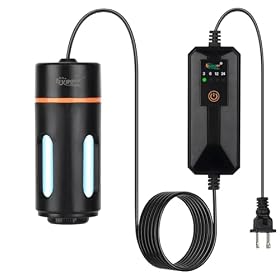
Green water is usually caused by free-floating algae, so a UV clarifier is often faster than simply adding more filter capacity. Filtration still matters for removing dead algae and controlling the nutrients that fuel the bloom.
Green aquarium water is usually a free-floating algae bloom. More filtration can help remove algae and reduce the nutrients that feed it, but a properly sized UV clarifier is generally the faster, more direct solution for clearing the water itself. The best choice depends on whether the problem is suspended algae, poor waste control, or both.
The quick decision
Choose a UV unit when:
The water is uniformly green or cloudy green.
You can see little debris in the water, but the tank will not clear.
Water tests and maintenance are otherwise reasonable.
You want to target free-floating algae directly.
Improve or upgrade filtration when:
The filter is undersized for the tank or its fish load.
Mechanical media is clogged, missing, or too coarse to catch fine particles.
The tank has visible debris, mulm, or cloudy water from suspended waste.
Ammonia or nitrite is detectable, or nitrate is consistently high.
The filter has poor circulation or the media is being bypassed.
Use both when the tank has an active algae bloom plus excessive nutrients, heavy stocking, overfeeding, or weak biological filtration. A UV unit may clear the green appearance while the filter and maintenance routine address the cause.
What causes green water?
Green water is most often caused by microscopic algae suspended throughout the water column. Common triggers include:
Strong or extended lighting
Direct sunlight
Excess food or fish waste
Recently added nutrients, including some fertilizers
A new or recently disturbed aquarium with an immature biological filter
Low circulation that leaves nutrients concentrated in parts of the tank
The algae are too small to be removed efficiently by ordinary coarse filter media. A filter can still help, especially with fine mechanical media, but simply adding more biological media will not necessarily make green water disappear quickly.
Product prices and availability are accurate as of the date/time indicated and are subject to change. Any price and availability information displayed on Amazon.com at the time of purchase will apply to the purchase of this product.
When more filtration is the better choice
More or better filtration is the right first move when green water is only one symptom of broader water-quality problems.
Check the existing filter first
Before buying a larger filter, verify that the current one is working as intended:
Make sure water is passing through the media rather than around it.
Rinse reusable media in removed aquarium water, not untreated tap water.
Replace disposable cartridges or worn media according to the manufacturer’s instructions.
Check the intake tube, strainer, impeller area, and outlet for blockages.
Confirm that the filter is circulating all areas of the tank.
Check ammonia, nitrite, and nitrate with a suitable aquarium test kit.
A clogged filter may have reduced flow, while a filter packed too tightly with fine media may also restrict circulation. Do not remove established biological media unnecessarily; doing so can reduce beneficial bacteria and cause a new cycle problem.
Add fine mechanical filtration carefully
Fine filter floss or polishing media can capture suspended particles, including some algae, but it may clog quickly during a bloom. Inspect it frequently and replace or clean it as directed. Never allow clogged media to starve the pump of water.
Mechanical media removes material from the water. It does not prevent algae from growing if excessive light and nutrients remain.
Upgrade filtration for long-term capacity
Consider a larger or additional aquarium filter when the tank has a heavy bioload, frequent debris, unstable water parameters, or inadequate circulation. Look beyond the advertised flow number: media volume, intake design, adjustability, maintenance access, and noise can matter just as much.
A larger filter is not automatically better if it creates excessive current for the fish or if its stated flow drops substantially once media and tubing are installed. Match the filter to the aquarium, livestock, and manufacturer guidance.
Product prices and availability are accurate as of the date/time indicated and are subject to change. Any price and availability information displayed on Amazon.com at the time of purchase will apply to the purchase of this product.
When a UV unit is the better choice
A UV clarifier targets organisms suspended in the water as they pass near an ultraviolet lamp. For green water caused by free-floating algae, this can be much more direct than adding ordinary filter media.
A UV unit is especially useful when:
The tank is otherwise cycled and stable.
The primary visual problem is green water, not debris.
You want a relatively quick way to clear suspended algae.
You can install it with appropriate flow and safe connections.
UV does not remove fish waste, uneaten food, nitrate, or phosphate. It also does not solve algae growing on the glass, substrate, rocks, or decorations. Those problems require changes to lighting, maintenance, feeding, nutrient control, or circulation.
UV sizing and flow matter
Do not choose a UV unit by wattage alone. Effectiveness depends on the unit’s design, the water flow through it, the contact time, lamp condition, and the manufacturer’s aquarium-size and flow guidance.
A flow rate that is too high may reduce the treatment effect because water passes through too quickly. A flow rate that is too low may provide more exposure but can limit circulation or fail to suit the unit’s design. Use the manufacturer’s specified flow range rather than assuming the pump’s maximum rating is appropriate.
The lamp and quartz sleeve also need periodic inspection and cleaning. Mineral deposits or organic film can reduce UV transmission. Replace the lamp on the schedule specified by the manufacturer, even if it still appears to produce visible light; a glowing lamp is not proof that it is delivering its original UV output.
Replacement media for improving aquarium filtration
Product prices and availability are accurate as of the date/time indicated and are subject to change. Any price and availability information displayed on Amazon.com at the time of purchase will apply to the purchase of this product.
Why using both can work better
Filtration and UV perform different jobs:
Mechanical filtration removes particles from the water.
Biological filtration supports bacteria that process toxic fish waste.
UV treatment affects certain suspended organisms and microorganisms that pass through the unit.
A UV clarifier can make green water clear, but the filter still needs to remove dead algae and handle normal aquarium waste. If the bloom is driven by excess nutrients, the tank can turn green again after the UV is stopped unless the underlying conditions improve.
A practical combined approach is to maintain the main filter, add or clean appropriate mechanical media, reduce excess light, and install a UV unit only if the green-water bloom persists or needs prompt clearing.
Before buying either option
Reduce direct light
Move the aquarium away from direct sun if possible. Use a consistent lighting schedule and avoid leaving aquarium lights on longer than the plants and livestock require. A temporary reduction in lighting may help, but avoid making abrupt changes that stress light-dependent plants or animals.
Review feeding and stocking
Feed only what the fish consume promptly. Remove uneaten food and consider whether the aquarium is heavily stocked for its filter and maintenance schedule. More fish produce more waste, and no filter can eliminate the need for water changes.
Perform appropriate maintenance
Use a gravel vacuum and partial water changes as appropriate for the aquarium. Avoid replacing all filter media at once, since that can remove beneficial bacteria. Never rinse biological media under untreated tap water unless the product instructions specifically allow it.
Test the water
Test for ammonia, nitrite, and nitrate. If ammonia or nitrite is detectable, address that water-quality problem before focusing only on appearance. If nitrate is persistently high, investigate stocking, feeding, water-change frequency, source water, and filtration capacity.
Troubleshooting after installation
The UV unit runs but the water stays green
Check that water is actually flowing through the UV chamber, that the lamp is installed correctly, and that the quartz sleeve is clean. Confirm that the flow rate matches the manufacturer’s recommendation. Very dense blooms may take time to clear, and the unit cannot treat algae that is growing on surfaces rather than suspended in the water.
The water clears, then turns green again
Look for continuing excess light or nutrients. Check feeding, stocking, fertilizer use, water-change practices, and filter maintenance. The UV unit may be working, but it is treating the symptom while the bloom’s cause remains.
The new filter has weak flow
Inspect the intake, tubing, impeller, and outlet for obstructions. Make sure media is installed in the correct order and is not packed so tightly that water cannot pass through. If the filter is making unusual electrical noise, overheating, leaking, or repeatedly losing prime, unplug it and follow the manufacturer’s troubleshooting instructions. Do not open or repair mains-powered equipment unless qualified to do so.
Bottom line
For genuinely green, uniformly cloudy water, a correctly sized UV clarifier is usually the more targeted choice. Choose better filtration when the aquarium also has debris, unstable water parameters, inadequate biological capacity, or poor circulation. In many problem tanks, the most durable solution is a combination: correct the light and nutrient problem, maintain adequate mechanical and biological filtration, and use UV to clear persistent free-floating algae.
FAQ
Will a bigger aquarium filter remove green water?
It may help, especially if the existing filter is undersized or has effective fine mechanical media, but a larger filter alone may not clear a dense free-floating algae bloom quickly. A UV clarifier targets that specific problem more directly.
Can a UV clarifier replace my aquarium filter?
No. A UV clarifier does not provide the same mechanical and biological filtration as the main aquarium filter. It does not process fish waste or remove nutrients from the aquarium.
How long does a UV unit take to clear green aquarium water?
The time depends on the algae density, UV design, water flow, lamp condition, and aquarium conditions. Follow the unit’s flow and sizing instructions, and correct excess light and nutrients so the bloom does not return.
Will UV kill beneficial bacteria in my aquarium?
A UV unit mainly affects organisms that pass through its chamber. It does not replace the need for established biological media. Keep the main filter running and avoid unnecessary replacement of biological media.
Should I turn off the aquarium light while treating green water?
Reducing excessive light and eliminating direct sunlight can help control the bloom. Use a reasonable lighting schedule for the aquarium’s plants and livestock rather than leaving the tank in darkness without considering their needs.