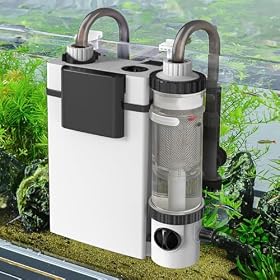
Internal filters are compact and simple, while hang-on-back filters usually offer easier media access and more flexible filtration. The better choice depends on tank size, available space, livestock, flow needs, and noise tolerance.
An internal filter sits inside the aquarium and is often the simplest choice for small tanks, quarantine setups, and tanks where you want minimal equipment outside the glass. A hang-on-back (HOB) filter hangs on the rear rim, keeps most equipment outside the tank, and usually provides more room for filter media and easier maintenance. For many community aquariums, a HOB is the more flexible option; for compact or tightly placed tanks, an internal filter may be the better fit.
Internal filter versus hang-on-back at a glance
Factor
Internal filter
Hang-on-back filter
Installation
Sits inside the tank, usually with suction cups or a bracket
Hangs on the aquarium rim
Space outside the tank
Very little
Requires rear clearance
Space inside the tank
Takes up some swimming and visual space
Leaves most of the display area open
Media capacity
Usually limited by the compact housing
Often has more room for mechanical, biological, and chemical media
Maintenance access
The unit must be removed or opened in the tank area
Media is usually accessible from above or behind the tank
Noise
Often quiet when fully submerged
Can be quiet, but the waterfall and impeller may add noise
Water movement
Outlet can create direct, localized flow
Return flow can provide broader surface agitation
Best fit
Small tanks, quarantine tanks, and simple setups
Community tanks needing flexible filtration and easier servicing
Choose an internal filter if these factors matter most
You have a small or crowded tank
Internal filters are useful when the aquarium has limited space behind it or sits close to a wall. They can also work well in small tanks where a larger external filter would be visually distracting or physically difficult to mount.
Check the filter's actual dimensions, not just its stated tank-size range. The unit needs enough room for the intake, outlet, and power cord without pressing against décor or livestock.
You want a simple installation
Most internal filters attach with suction cups or an internal bracket. There is no need to balance a filter body on the rim or make sure the back of the aquarium has enough clearance.
This can be helpful for temporary setups, quarantine tanks, and aquariums that are moved occasionally. Always route the power cord with a drip loop so water cannot run along the cord into the outlet.
You prefer submerged, less noticeable water movement
Because the motor and pump are underwater, an internal filter may produce less audible splashing than a HOB. You can often adjust the outlet or aim it at the glass to soften the current.
That does not make every internal filter silent. Vibration against the glass, a dirty impeller, trapped air, or a worn suction cup can still create humming or rattling.
You need a filter for quarantine or temporary use
An internal filter is convenient when you need filtration without permanently installing equipment on the display tank. Choose a model that is easy to remove and clean, and avoid sharing used media between tanks unless it has been properly managed for the situation.
Product prices and availability are accurate as of the date/time indicated and are subject to change. Any price and availability information displayed on Amazon.com at the time of purchase will apply to the purchase of this product.
Choose a hang-on-back filter if these factors matter most
You want more room for filter media
HOB filters commonly provide a larger media chamber than compact internal filters. That gives you more flexibility to use a coarse mechanical stage, biological media, and optional specialty media when appropriate.
Media capacity matters more than the advertised pump flow alone. A filter with a large media chamber can remain useful as the aquarium's bioload increases, while a small cartridge-only design may offer fewer maintenance options.
You want easier routine maintenance
With a HOB filter, the media and impeller are usually accessible from above without reaching into the aquarium. This makes it easier to rinse mechanical media, inspect the impeller, and remove debris from the intake.
Rinse reusable mechanical media in removed aquarium water rather than untreated tap water when preserving beneficial bacteria is important. Replace or clean media according to the manufacturer's instructions, and do not replace all established biological media at once unless there is a specific reason.
You want stronger surface agitation
The HOB return usually drops water back into the aquarium, helping disturb the surface and support gas exchange. This can be useful in a stocked community tank, especially when the outlet is positioned to create gentle surface movement without producing excessive current.
The waterfall can become noisy if the water level falls. Keeping the aquarium water near the filter's recommended level usually reduces splashing, but topping off does not replace regular water changes or maintenance.
You want filtration that can grow with the tank
A HOB is often easier to upgrade within the same general equipment style. You may be able to use different media arrangements, add a prefilter sponge to the intake, or adjust the return flow depending on the design.
Do not rely only on a manufacturer's maximum tank-size claim. Actual suitability depends on fish size, feeding, waste production, plants, décor, and maintenance frequency.
Product prices and availability are accurate as of the date/time indicated and are subject to change. Any price and availability information displayed on Amazon.com at the time of purchase will apply to the purchase of this product.
How to compare the specifications
Rated flow versus useful flow
Manufacturers may list a pump's flow rate in gallons per hour, but that figure does not always represent the flow after media, tubing, intake protection, and water lift are taken into account. A clogged sponge or heavily packed media chamber can reduce output further.
Use the rated capacity as a starting point, then consider the tank's bioload and the livestock's current tolerance. A filter should circulate and clean the water effectively without creating a current that constantly pushes fish around.
Media type and capacity
Look for enough space to use mechanical and biological filtration in a sensible order. Mechanical media catches particles; biological media provides surfaces for beneficial bacteria; chemical media is optional and situation-dependent.
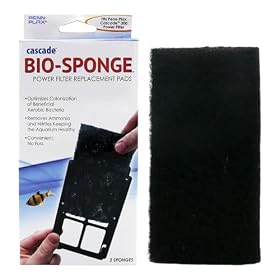
A proprietary cartridge can be convenient, but it may be less flexible or more expensive to maintain than a design that accepts separately sized media. Confirm the replacement-media availability and the cost of routine consumables before buying.
Adjustable flow
Adjustable flow is particularly valuable for bettas, shrimp, juvenile fish, and other livestock that may struggle in a strong current. If flow cannot be adjusted, check whether the outlet can be redirected or softened with a sponge or baffle approved for that filter.
Any modification must leave the intake and return unobstructed and must not allow media or small livestock to enter the impeller.
Intake protection
Small fish, shrimp, fry, and long-finned species may benefit from a prefilter sponge or guarded intake. An intake sponge can also add mechanical filtration, but it needs regular cleaning because a clogged sponge can reduce flow and increase the chance of poor circulation.
Make sure any added prefilter fits securely and does not cause the pump to run dry or starve for water.
Power-loss behavior
A HOB may need to be refilled or primed after a power interruption, depending on its design and water level. An internal filter generally remains submerged, but the pump still needs adequate water and a clear intake to restart reliably.
If a filter does not restart after power returns, unplug it before checking the impeller or adding water. Follow the manufacturer's restart instructions.
Product prices and availability are accurate as of the date/time indicated and are subject to change. Any price and availability information displayed on Amazon.com at the time of purchase will apply to the purchase of this product.
Noise and placement differences
For the quietest setup, place the aquarium on a stable, level surface and prevent the filter or tubing from touching the stand or glass in a way that transfers vibration.
An internal filter's common noise sources include a dirty impeller, trapped air, loose suction cups, and debris in the intake. A HOB's common noise sources include a low water level, an obstructed intake, a dirty impeller, an incorrectly seated cover, and vibration from the housing.
A HOB may be quiet once properly filled and maintained, but its return can always produce some water sound. If the aquarium is in a bedroom or office, compare the expected waterfall noise with your tolerance rather than assuming one filter type is automatically silent.
Product prices and availability are accurate as of the date/time indicated and are subject to change. Any price and availability information displayed on Amazon.com at the time of purchase will apply to the purchase of this product.
Which filter is better for your aquarium?
Choose an internal filter when you have a small aquarium, little rear clearance, a quarantine setup, or a strong preference for a compact submerged unit. It is also a practical option when simple installation matters more than maximum media capacity.
Choose a hang-on-back filter when you have adequate space behind the tank, want easier access to media, need more filtration flexibility, or prefer strong surface agitation. It is often the better general-purpose choice for a small-to-medium community aquarium, provided the flow is suitable for the livestock.
For either type, select filtration based on the aquarium's real bioload rather than water volume alone. A lightly stocked planted tank and a heavily stocked fish tank of the same size may need very different maintenance and filtration strategies.
Troubleshooting either filter type
If water flow suddenly drops, check the causes in this order:
Clean or inspect the filter media. A clogged sponge, cartridge, or fine pad is the most common restriction. Rinse reusable media appropriately and replace disposable media according to the instructions.
Check the intake and outlet. Remove plant fragments, gravel, algae, and other debris. Inspect the intake guard or prefilter sponge for blockage.
Inspect the impeller and impeller well. Unplug the filter first. Debris, calcium buildup, or a damaged impeller can cause weak flow, rattling, or failure to start.
Check for air and water-level problems. An internal filter must remain submerged. A HOB usually needs the correct aquarium water level and may need priming after cleaning or a power interruption.
Check seals, covers, and fit. A poorly seated cover, cracked housing, loose suction cup, or leaking connection can cause noise or reduced performance.
Review the setup. Make sure media is not packed too tightly, the outlet is not blocked, and added tubing or accessories are compatible with the filter.
Consider a replacement part or filter. Replace a worn impeller, damaged seal, broken bracket, or deteriorated suction cup when the part is available. If the motor is overheating, repeatedly trips protection, leaks around the electrical housing, or will not restart after basic checks, unplug it and replace the unit or have it evaluated by a qualified professional. Do not operate damaged aquarium electrical equipment.
Unplug aquarium equipment before placing your hands in the water, and use a properly protected outlet with a drip loop. Follow the filter manufacturer's instructions for cleaning, priming, and replacement parts.
FAQ
Is an internal filter better than a hang-on-back filter?
Neither is universally better. An internal filter is usually better for compact, temporary, or low-clearance setups. A hang-on-back filter usually offers more media capacity, easier maintenance, and stronger surface agitation.
Are hang-on-back filters noisy?
They can produce water noise or vibration, especially when the water level is low, the impeller is dirty, or the housing is not seated correctly. Proper water level, cleaning, and stable placement can reduce noise.
Can an internal filter be used in a community aquarium?
Yes, if its flow and filtration capacity match the aquarium's bioload and livestock. Protect the intake when keeping small fish, shrimp, or fry, and make sure the outlet does not create excessive current.
Does a hang-on-back filter provide biological filtration?
It can. Biological filtration occurs on suitable surfaces in the filter media and other established aquarium surfaces. The amount and effectiveness depend on the media, water flow, maintenance, and aquarium bioload.
Should I choose a filter based only on the advertised tank size?
No. Tank-size ratings are starting points. Consider actual flow after media is installed, media capacity, livestock waste production, maintenance habits, and whether the aquarium's inhabitants prefer gentle or stronger circulation.