Live plants can reduce the need for chemical media in some aquariums, especially media used routinely to manage dissolved nutrients or discoloration. Growing plants take up nitrogen and phosphorus compounds, but their effect depends on plant growth, light, nutrient availability, and how heavily the tank is stocked. Keep the filter’s mechanical and biological stages, and continue testing and changing water as needed.
Media · Sat Sep 19
Live plants reducing the need for chemical media
Healthy, actively growing aquarium plants can take up some dissolved nutrients and reduce the need for chemical media used routinely. They do not replace mechanical filtration, biological filtration, or water changes—and they cannot reliably remove medications or every unwanted contaminant.
What plants can replace—and what they cannot
Plants use nutrients as they grow. In a well-lit tank with steady growth, they can take up some nitrogen compounds and phosphate, which may slow their buildup between water changes. Fast-growing plants generally remove nutrients faster than slow-growing plants, but there is no fixed amount they will remove in every tank.
That can make routine use of some chemical media less necessary. For example, if you were using chemical media mainly to polish the water or help manage nutrients, you can assess whether the plants and normal maintenance are enough by tracking water clarity and test results.
Plants do not replace:
- Mechanical filtration, which catches suspended debris. Leaves and roots do not reliably trap waste before it breaks down.
- Biological filtration, where beneficial bacteria convert toxic ammonia and nitrite. Do not remove or replace established biological media just because you added plants.
- Water changes, which remove dissolved waste and replenish minerals and other substances. Plants are not a dependable substitute.
- Targeted chemical filtration when you need to remove a specific substance. Plants cannot be relied on to remove medication after treatment, a known contaminant, or all compounds that cause odor or discoloration.
Activated carbon and other chemical media are not all interchangeable. Check the media label and your filter manufacturer’s guidance to understand what a particular product is intended to remove.
Live plants for a planted aquarium
 Live Aquarium Plants Variety Pack – Shore Aquatic Easy Beginner 9-Bundle Package | Freshwater Tank…Shore Aquatic
$25.75 as of
View on Amazon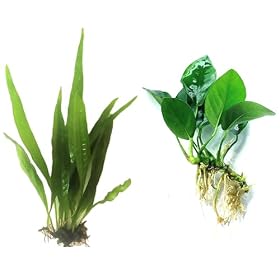 Java Fern and Anubias Aquarium Plant Bundle - Live Freshwater Plants for Aquascaping, Low Maintenance,…Marcus Fish Tanks
$14.97 as of
View on Amazon Live Aquarium Plants Bundle 4 Pack - Amazon Sword, Java Fern, Anubias & Cryptocoryne -…CANTON AQUATICS
$11.45 as of
View on Amazon
Product prices and availability are accurate as of the date/time indicated and are subject to change. Any price and availability information displayed on Amazon.com at the time of purchase will apply to the purchase of this product.
When you may be able to use less chemical media
Reducing routine chemical media may be reasonable when the tank is stable, plants are actively growing, and testing shows that water quality is staying within a safe range for its inhabitants. A lightly stocked, well-planted aquarium may need less routine chemical polishing than a heavily stocked tank with little plant growth.
If you want to find out whether a media type is still needed, change one thing at a time. Follow the media maker’s directions for removal or replacement, keep biological media in place, and monitor the tank rather than assuming plants will immediately take over the media’s job.
Lighting for live aquarium plants
 hygger Clip On 24/7 Lighting Aquarium LED Light,Sunrise-Daylight-Moonlight and DIY Mode, Adjustable Timer/Brightness Fish Tank…hygger
$29.99 as of
View on Amazon SEAOURA Led Aquarium Light for Plants Growth, Fish Tank Light 12-18 InchSEAOURA
$19.99 as of
View on Amazon SEAOURA Led Aquarium Light for Plants-Full Spectrum Fish Tank Light 18-24''SEAOURA
$22.99 as of
View on Amazon
Product prices and availability are accurate as of the date/time indicated and are subject to change. Any price and availability information displayed on Amazon.com at the time of purchase will apply to the purchase of this product.
How to make plant uptake more dependable
- Choose plants suited to your lighting, tank conditions, and maintenance routine. Fast-growing species can take up nutrients quickly, but may need more frequent trimming.
- Provide suitable light without leaving it on excessively. Too much light can encourage algae rather than healthy plant growth.
- Remove decaying leaves and excess plant material. As plant matter breaks down, it can return nutrients to the water.
- Avoid adding more fish or food on the assumption that plants will absorb the extra waste.
- Test ammonia and nitrite after changes that could affect filtration, and check nitrate over time to see whether it is accumulating.
When chemical media is still useful
Keep or use the appropriate chemical media when you have a specific reason, such as removing medication after treatment, addressing a known contaminant, or following advice for a particular water-quality problem. Use a media product intended for that purpose and follow its replacement instructions; plants are not a predictable substitute for these jobs.
If the aquarium has detectable ammonia or nitrite, treat that as a filtration or water-quality problem—not as a reason to add plants instead of correcting the cause. Check the filter, feeding, stocking, and maintenance, and seek species-appropriate guidance if readings persist. Do not discard established filter media during troubleshooting.
A practical way to decide
Keep mechanical and biological filtration. Let plants grow, remove decaying leaves, and compare test results and water clarity over time. If the tank remains stable and the chemical media was only being used for routine polishing, you may be able to reduce that use. If the media is serving a specific removal purpose, or the tank’s readings worsen, keep using the appropriate treatment and address the underlying cause.
FAQ
Can live plants replace activated carbon in an aquarium filter?
Sometimes plants may make routine chemical polishing less necessary, but they do not perform the same job as activated carbon. Plants cannot be relied on to remove medication, a known contaminant, or every cause of odor or discoloration.
Do aquarium plants remove ammonia and nitrite?
Plants can take up some nitrogen compounds, but they are not a dependable replacement for the beneficial bacteria in an established biological filter. Keep biological media in place and investigate any ammonia or nitrite readings.
Can a planted tank go without water changes?
Do not assume so. Plants may take up nutrients, but water changes also remove dissolved waste and replenish substances in the water. Set a maintenance schedule based on test results, tank conditions, and the needs of its inhabitants.
Which plants reduce nutrients fastest?
Fast-growing plants generally take up nutrients more quickly than slow-growing plants when they have suitable light and conditions. Actual uptake varies, so monitor the tank rather than relying on a plant list as a substitute for testing.