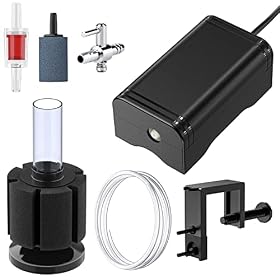
An air pump and a powerhead can both improve surface movement, but they solve different aquarium problems. Choose an air pump for gentle aeration and flexible placement, or a powerhead when you need stronger circulation and broader water movement.
An air pump is usually the better choice for gentle surface agitation, added aeration, and low-flow aquarium setups. A powerhead is better when the tank also needs stronger circulation, dead-spot reduction, or flow across a larger aquarium. Neither device directly adds oxygen on its own: gas exchange improves when the water surface is disturbed and exposed to air.
Air pump versus powerhead: the main difference
An air pump pushes air through airline tubing and an air stone, sponge filter, or other air-driven device. The rising bubbles lift and circulate water, creating surface ripples with relatively modest current.
A powerhead is a submersible water pump that moves aquarium water directly. Pointed toward the surface, it can create stronger ripples; aimed across the tank, it provides broad circulation and helps move water through the aquarium's filtration system.
Feature
Air pump
Powerhead
Primary output
Air bubbles and air-driven water movement
Direct water flow
Surface agitation
Gentle to moderate, depending on setup
Moderate to strong, depending on flow and positioning
Current inside the tank
Usually low
Can be substantial
Useful for
Aeration, sponge filters, gentle circulation
Flow patterns, dead spots, larger tanks, specialized filtration
Placement
Outside the tank, with tubing inside
Usually inside the tank or filter system
Common noise sources
Pump vibration, buzzing, check valve, air stone
Motor vibration, impeller, intake, or contact with glass
Choose an air pump when gentle agitation is the priority
An air pump is a practical fit when you want to increase surface movement without creating a strong directional current. It is commonly used with sponge filters, undergravel filters, air stones, and quarantine or hospital tanks.
Consider an air pump if:
Your fish prefer calm water or are weak swimmers.
You are running a sponge filter or another air-driven filter.
You need aeration during warm weather, medication, or a power-filter outage.
You want to add surface movement without taking much space inside the aquarium.
You need a simple way to operate multiple air-driven devices, provided the pump has enough output and outlets.
The air stone matters. Fine bubbles often create more visible bubbling, while a larger or coarser diffuser may produce a different flow pattern and require less back pressure. Match the air stone and tubing to the pump's output rather than assuming a larger pump is always better.
An air pump does not replace mechanical or biological filtration unless it is connected to a filter such as a sponge filter. An air stone alone can improve circulation and gas exchange, but it does not remove suspended waste in the same way a properly sized aquarium filter does.
Product prices and availability are accurate as of the date/time indicated and are subject to change. Any price and availability information displayed on Amazon.com at the time of purchase will apply to the purchase of this product.
Choose a powerhead when circulation is also needed
A powerhead is the stronger choice when surface agitation is only one part of the goal. Because it moves water directly, it can circulate water across a tank, reduce stagnant areas, and support equipment that requires water flow.
Consider a powerhead if:
The aquarium has dead spots where debris collects.
You need flow across a long or heavily decorated tank.
The filtration system does not circulate water evenly.
You want to create a directional current or wave-like surface movement.
The aquarium contains fish, corals, or plants that require more circulation, subject to their care requirements.
Powerhead flow is generally described by a flow rate, but the usable movement depends on tank dimensions, decorations, intake guards, outlet design, and how far the water must travel. A pump with a high published flow rate can still create poor circulation if it is aimed incorrectly or blocked by hardscape.
Avoid directing a strong jet continuously at fish that prefer calm water. Aiming the outlet slightly upward can create surface ripples while reducing the force of a direct current. In many tanks, indirect flow against the glass or across the surface is more useful than pointing the pump straight across open water.
Product prices and availability are accurate as of the date/time indicated and are subject to change. Any price and availability information displayed on Amazon.com at the time of purchase will apply to the purchase of this product.
Which provides better oxygenation?
For oxygen exchange, the important factor is surface movement rather than bubbles themselves. Both devices can improve gas exchange when they keep the surface moving.
An air pump is often the easiest way to provide gentle, continuous agitation. A powerhead can be equally effective or stronger if it produces broad surface ripples, but it may create more current than the aquarium inhabitants need.
Do not rely on surface agitation to correct an unexplained oxygen problem. Check for excessive temperature, overcrowding, blocked filtration, decaying material, or inadequate maintenance. Fish gasping at the surface can indicate an urgent water-quality or equipment issue. Increase safe aeration while checking the aquarium and follow appropriate emergency aquarium-care guidance.
A tightly sealed lid can also reduce air exchange, although it does not necessarily make a lid unsuitable. Leave appropriate clearance and maintain normal ventilation around equipment according to the aquarium manufacturer's instructions.
Product prices and availability are accurate as of the date/time indicated and are subject to change. Any price and availability information displayed on Amazon.com at the time of purchase will apply to the purchase of this product.
Noise and installation differences
Air pumps sit outside the aquarium, so vibration can transfer through the stand or cabinet. Placing the pump on a stable, soft surface may reduce buzzing, but do not block its ventilation openings. Keep the pump above the waterline when possible. If it must sit below the waterline, use a check valve in the airline so water cannot siphon backward during a shutdown.
Powerheads are submerged, which can reduce airborne motor noise, but they may transmit vibration through the aquarium glass or stand. A powerhead can also become noisy when its intake is clogged, its impeller has debris, or it is touching the glass or decorations.
Air pumps also introduce the sound of escaping bubbles. An air stone that is clogged or heavily mineral-coated may increase back pressure and make the pump work harder.
Product prices and availability are accurate as of the date/time indicated and are subject to change. Any price and availability information displayed on Amazon.com at the time of purchase will apply to the purchase of this product.
How to decide for common aquarium setups
Small or calm-water aquarium
Start with an air pump and appropriately sized air stone or sponge filter if the goal is gentle agitation. Adjust the output with an air control valve if necessary, but do not force a pump against a completely closed valve.
Aquarium with dead spots
A powerhead is usually more useful because it can move water through areas where debris settles. Position it to complement the main filter rather than creating a circular flow pattern that pushes waste into one corner.
Sponge-filtered quarantine tank
An air pump is generally the natural match. It powers the sponge filter while providing surface movement, and the flow can usually be kept gentler than with a direct-flow powerhead.
Planted aquarium
Either device may work. Use enough surface movement for gas exchange without creating unnecessary turbulence. Excessive agitation can increase gas exchange and may affect carbon dioxide management in setups that deliberately add carbon dioxide. Follow the aquarium's plant-care plan and monitor livestock behavior.
Marine or high-flow aquarium
A powerhead is usually the more appropriate tool for broad circulation and flow control. An air pump may still have a role in specific equipment or emergency aeration, but it normally cannot substitute for the circulation pattern produced by dedicated water movement.
Can you use both?
Yes. An air pump and a powerhead can serve different purposes in the same aquarium. For example, a powerhead may circulate water through the display while an air pump runs a sponge filter or provides backup aeration.
Using both is not automatically better. Check that the combined flow does not stress the fish, disturb substrate, uproot plants, or create excessive evaporation and salt creep. Add equipment based on a specific circulation or filtration need rather than simply maximizing movement.
Troubleshooting weak surface agitation
If an air pump produces fewer bubbles
Check that the tubing is firmly connected and not kinked.
Inspect the air stone for mineral buildup or clogging; replace it if cleaning does not restore flow.
Check the sponge filter, uplift tube, and air intake for blockage.
Confirm that a check valve is installed in the correct direction.
Make sure the pump is not being forced against excessive back pressure or too many devices.
If the pump hums but produces little air after these checks, a diaphragm or internal pump fault may require a replacement pump.
If a powerhead has weak or uneven flow
Unplug it before placing your hands in the aquarium or touching the pump.
Clean the intake guard and remove plant debris, gravel, or other obstructions.
Inspect the impeller and impeller well for buildup or damage.
Confirm that the outlet is not blocked or pressed against the glass.
Reposition the powerhead so decorations do not split or stop the flow.
If the motor remains noisy or weak after cleaning, replace the impeller if the manufacturer offers one; otherwise, replacement of the powerhead may be reasonable.
Always follow the device manual for cleaning, maintenance, and electrical safety. Use a properly protected aquarium outlet and keep electrical connections arranged so water cannot run along the cord into the outlet.
Bottom line
Choose an air pump for gentle surface agitation, air-driven filtration, quarantine tanks, and calm-water species. Choose a powerhead when you need stronger circulation, fewer dead spots, or a controllable directional flow. If oxygen exchange is the only goal, start with the least forceful setup that creates consistent surface ripples without stressing the aquarium's inhabitants.
FAQ
Is an air pump better than a powerhead for oxygenation?
Not automatically. Oxygen exchange depends mainly on surface movement and gas exchange with the surrounding air. An air pump usually provides gentler agitation, while a powerhead can create stronger ripples but also more current.
Can a powerhead replace an air pump?
Sometimes, if the powerhead creates adequate surface movement and you do not need to operate an air-driven sponge filter or other air device. It cannot replace the air supply required by equipment that specifically runs on air.
Should an air stone be placed near the surface or the bottom?
Placement depends on the desired circulation and aquarium setup. Deeper placement usually gives bubbles more distance to lift water, but follow the air stone and aquarium equipment instructions and avoid excessive turbulence.
Why is my air pump loud but producing little air?
Common causes include a clogged air stone, kinked tubing, a blocked sponge filter, excessive back pressure, an incorrectly installed check valve, or a worn internal diaphragm. Disconnect power before servicing equipment and replace the pump if basic maintenance does not restore output.
Can too much surface agitation harm fish or plants?
Yes. Excessive flow can exhaust fish, disturb substrate, uproot plants, and create unnecessary evaporation. Reduce or redirect the flow if livestock struggles to swim or plants and decorations are constantly displaced.