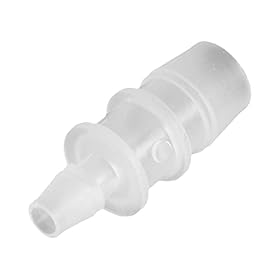
A quiet air pump for a bedroom should provide enough airflow for the sponge filter without excessive vibration or a constant hum. Focus on adjustable output, vibration isolation, reliable low-flow operation, and correct sizing for your tank.
A quiet air pump for a bedroom sponge filter should run gently and consistently rather than simply move the most air possible. Look for an adjustable aquarium air pump with vibration-reducing feet, enough output for your sponge filter, and a low-flow setting that does not make the filter excessively loud. Proper placement, soft tubing, and a check valve can reduce noise as much as the pump itself.
What to look for in a quiet air pump
Adjustable airflow
Adjustable output is one of the most useful features for a bedroom aquarium. A pump that is too powerful can make the sponge filter bubble loudly, create excessive surface agitation, or produce a strong current for small or slow-moving fish.
An adjustable pump lets you reduce airflow until the sponge filter is still circulating water effectively without churning the tank. If the pump has separate outlets, each outlet should be adjustable or fitted with an appropriate control valve so unused output does not create back pressure.
Low vibration
In a quiet room, vibration transmitted through a cabinet or tabletop can be more noticeable than the pump’s motor sound. Useful design features include:
Rubber feet or other vibration-isolating supports
A stable housing that does not rattle
A mounting option that keeps the motor from contacting the aquarium stand
A low-flow setting that does not cause the pump to buzz or chatter
Place the pump on a dense, soft pad, but do not block ventilation openings or enclose the pump in a sealed container. Keep it on a stable surface rather than directly on the aquarium lid or stand if those surfaces amplify vibration.
Enough airflow for the sponge filter
Tank volume alone does not determine the correct pump size. The required airflow also depends on the sponge filter’s size, the depth of the aquarium, the length of the airline, and whether the pump powers one filter or several.
Use the sponge filter manufacturer’s recommended airflow range when available. For a small sponge filter, a pump with a controllable low output is often more suitable than a high-output pump that must be heavily restricted. For a larger filter or multiple filters, select a pump with enough rated airflow and use a splitter or manifold only when the pump is designed to handle the setup.
Do not rely on a pump’s maximum airflow rating by itself. Maximum output is commonly measured under less restrictive conditions than a submerged sponge filter, so actual performance can be lower once the air has to travel through tubing and push water at aquarium depth.
Steady operation at low output
A bedroom setup benefits from a pump that remains stable when turned down. Some pumps become louder, stall, or produce uneven bubbling when operated near their minimum setting. A continuously adjustable pump or a model with a clearly specified low-flow range can make nighttime tuning easier.
If the pump will run continuously, check the manufacturer’s instructions for continuous-duty use and keep the pump dry and properly ventilated.
How quiet should the setup be?
Published sound ratings can help compare pumps, but they are not a complete guarantee of bedroom silence. Noise depends on the surface under the pump, room acoustics, water depth, tubing position, and bubble size.
A quieter setup usually has all of these characteristics:
The pump is not oversized for the sponge filter.
Airflow is reduced to the minimum effective level.
The pump sits on vibration-isolating feet or a suitable pad.
Tubing is not stretched tightly against the aquarium or stand.
The air stone or sponge filter produces fine, even bubbles instead of large bursts.
A check valve prevents water from flowing backward if the pump stops.
Bubble noise often comes from the sponge filter rather than the pump. If the filter is working correctly but the bubbling is disruptive, reducing airflow or using a finer-pore air stone, if compatible with the filter, may help. Follow the sponge filter manufacturer’s instructions before changing its air stone or diffuser.
Product prices and availability are accurate as of the date/time indicated and are subject to change. Any price and availability information displayed on Amazon.com at the time of purchase will apply to the purchase of this product.
Choosing the right pump for a sponge filter
One small sponge filter
Choose a compact pump with adjustable output and enough airflow for the filter’s stated range. The ability to run quietly at a low setting is usually more important than a high maximum rating.
One large sponge filter
A larger filter may need more air to move water through its full sponge surface. Check the filter’s recommended pump range and account for the aquarium’s depth. If the pump must run at its maximum setting constantly, choose a more capable unit or reconsider whether the filter and pump are well matched.
Two sponge filters or multiple air accessories
A pump powering multiple outlets needs sufficient total airflow. Add the requirements of the connected filters and accessories, then allow practical capacity for tubing and water depth. A manifold with individual control valves can balance flow, but closing outlets completely may not be appropriate for every pump. Use the pump’s instructions and route unused air safely through a control valve or suitable outlet.
Bedroom-friendly setup tips
Use a check valve
Install an aquarium check valve in the airline between the pump and the aquarium, with the valve oriented in the correct direction. This helps prevent water from siphoning back into the pump during a power outage or when the pump is unplugged.
The check valve adds a small amount of resistance, so confirm that the pump can still provide adequate airflow after installation. Replace a cracked, blocked, or stiff check valve.
Keep the pump above the waterline when possible
Place the pump above the aquarium’s water level if the manufacturer permits. A check valve is still a prudent safeguard because the water level, tubing path, and pump position can change.
If the pump must be positioned below the waterline, follow the manufacturer’s installation instructions carefully and use the required backflow protection.
Avoid tight tubing and sharp bends
Use aquarium airline tubing of the correct inside diameter and keep the route reasonably short. Kinks, pinched tubing, and sharp bends restrict airflow and can make the pump work harder or produce uneven bubbling.
Do not run tubing tightly against the stand, wall, or aquarium lid if it transfers vibration. Loose, cleanly routed tubing is less likely to rattle.
Clean the sponge filter regularly
A clogged sponge increases resistance and can make the system noisier while reducing filtration. Rinse the sponge in removed aquarium water during routine maintenance. Avoid washing beneficial filter media under untreated tap water unless your aquarium maintenance instructions specifically call for it, because chlorine or chloramine can damage beneficial bacteria.
Air pump features that matter less
A very high maximum airflow rating is not automatically an advantage for a bedroom sponge filter. Excess capacity can be useful for future equipment, but only if the pump can be adjusted quietly at the lower output your current filter needs.
Multiple outlets are useful when you run several air-driven devices, but they add complexity and do not necessarily make a pump quieter. A pump with a dependable single outlet may be the better choice for one sponge filter.
Battery backup can protect aeration during a power outage, but it is a separate consideration from normal operating noise. If outage protection matters, choose a backup system designed for aquarium aeration and follow its safety instructions.
Troubleshooting noise after installation
The pump hums or buzzes
Move it off the aquarium lid or a hollow cabinet surface.
Place it on stable vibration-isolating feet or a suitable dense pad.
Check that the housing and feet are not loose.
Make sure tubing is not pulling against the pump or stand.
Reduce airflow slightly and listen for a quieter operating point.
The bubbles are too loud
Turn down the pump while confirming that water is still circulating through the sponge.
Check whether the sponge filter is sitting securely and not tapping the glass.
Inspect the air stone or diffuser for damage or uneven bubbling.
Verify that the pump is rated for the aquarium depth and filter size.
Check whether a control valve is nearly closed.
The pump becomes louder over time
Inspect the pump’s air intake filter, diaphragm, and other serviceable parts if the manufacturer provides replacement procedures. Unplug the pump before inspection, keep electrical connections dry, and do not open a sealed unit unless the manufacturer permits service.
A replacement diaphragm, air filter, check valve, or airline may restore performance when the pump itself is otherwise in good condition. If the pump rattles internally, overheats, smells burned, trips a protection device, or has a damaged power cord, unplug it and replace it or have it evaluated by a qualified professional. Keep electrical equipment away from splashes and use a properly installed ground-fault circuit interrupter where required by local code.
Bottom line
For a bedroom sponge filter, prioritize adjustable low-flow operation, vibration isolation, and compatibility with the filter’s recommended airflow range. A correctly sized pump set just high enough to maintain steady filtration is usually quieter than an oversized pump restricted by a valve. Add a check valve, route tubing carefully, and treat bubble noise and motor vibration as separate problems when fine-tuning the aquarium.
FAQ
What size air pump do I need for a sponge filter?
Use the sponge filter manufacturer’s recommended airflow range, then account for aquarium depth, tubing length, and the number of connected devices. A pump with adjustable output is easier to tune than one that only offers a high fixed flow.
Are air pumps too loud for a bedroom aquarium?
Some can be suitable for a bedroom, especially when operated at a low effective flow and placed on vibration-isolating feet. The aquarium’s bubble noise, stand, tubing, and room acoustics can be as important as the pump’s motor sound.
Can I run a sponge filter with a very small air pump?
Only if the pump provides enough airflow at the aquarium’s depth to keep water moving through the sponge. Weak or intermittent bubbling may indicate that the pump is undersized, the tubing is restricted, or the filter needs cleaning.
Does a check valve make an aquarium air pump quieter?
Not usually. Its primary purpose is to prevent water from flowing back toward the pump. It adds some airflow resistance, so use a suitable valve and confirm that adequate bubbling continues after installation.