Replacement ceramic rings can restore the biological media capacity of a canister filter, but the right choice depends on basket space, ring size, water flow, and whether the old media is still usable.
Replacement ceramic rings for a canister
Replacement ceramic rings are a practical way to refresh the biological media in a canister filter without replacing the entire filter. Choose rings that fit the media basket, leave room for water to pass through, and suit your maintenance routine. You usually do not need to replace ceramic media on a fixed schedule: replace it when it is damaged, permanently clogged, breaking apart, or no longer practical to clean.
What ceramic rings do in a canister filter
Ceramic rings provide protected surfaces where beneficial bacteria can colonize. These bacteria help process toxic ammonia and nitrite as part of the aquarium’s biological filtration system.
The rings are not primarily mechanical media. They do not replace a sponge, floss pad, or other material used to catch debris. For best results, water should normally pass through mechanical media before reaching the ceramic rings. This helps keep the biological media from becoming packed with waste.
Ceramic rings also do not remove medications, odors, or many dissolved impurities in the same way that activated carbon or specialized chemical media can.
How to choose replacement ceramic rings
Match the ring size to the media basket
Measure the available space before ordering. Rings that are too large may not fit through a basket opening or may prevent a tray from closing. Very small rings can work, but they may move around more easily and may require a media bag for convenient removal.
Check these dimensions when the listing provides them:
Outside diameter
Length or height
Inner-hole diameter
Total media volume or package weight
The most useful measurement is the amount of media your canister tray can hold. Package weight is not a direct substitute for volume because ceramic products vary in density and shape.
Buy enough to fill the intended media space, not every empty space
A canister does not need to be tightly packed with ceramic rings. Overfilling can restrict water flow, make the basket difficult to remove, and allow debris to collect between the rings. Follow the canister manufacturer’s media-loading instructions and leave any required clearance for the lid, grate, or water path.
If the filter has several trays, use the biological media in the tray or section intended for it. Do not block the intake or outlet channels.
Look for aquarium-specific media
Choose ceramic rings sold for aquarium filtration rather than generic ceramic pieces with unknown coatings or manufacturing residues. The product should be intended for freshwater or saltwater aquarium use, as appropriate for your setup.
Avoid media that is painted, fragranced, treated with unknown chemicals, or marketed for a non-aquarium purpose. If the listing does not clearly explain aquarium use, material, or preparation instructions, choose a more clearly identified product.
Consider the type of canister maintenance you prefer
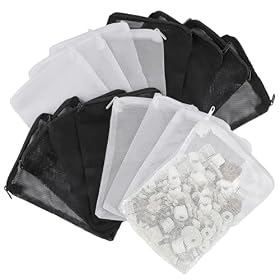
Loose rings provide flexibility and can be arranged around other biological media. Rings supplied in a mesh bag are easier to remove and rinse, but the bag must still fit inside the tray without obstructing flow.
A coarse, open structure is generally easier to rinse than very small or tightly packed media. Fine pores may offer additional surface area, but they can clog more readily if the pre-filtering stage is inadequate. In practice, reliable water flow and regular mechanical-media maintenance matter as much as the advertised surface-area claim.
Product prices and availability are accurate as of the date/time indicated and are subject to change. Any price and availability information displayed on Amazon.com at the time of purchase will apply to the purchase of this product.
Should you replace all the old ceramic rings?
Usually, no. If the existing rings are intact and can be rinsed without crumbling, keep them. Replacing all biological media at once removes much of the established bacterial colony and can contribute to an aquarium cycle problem.
Replace only damaged or unusable media when possible. If you must replace everything, add the new rings alongside established media for a period recommended by the filter or aquarium-care manufacturer, monitor ammonia and nitrite, and avoid adding a large new bioload during the transition.
Never clean biological media with soap, household cleaners, or untreated chlorinated tap water. Swish it gently in removed aquarium water or use water-treatment guidance appropriate to your aquarium.
Product prices and availability are accurate as of the date/time indicated and are subject to change. Any price and availability information displayed on Amazon.com at the time of purchase will apply to the purchase of this product.
How to install replacement ceramic rings in a canister
Unplug the canister filter and close its valves, if equipped.
Remove the media basket and keep track of the original media order.
Rinse new ceramic rings according to the manufacturer’s instructions until loose dust is removed. Do not use soap or cleaning chemicals.
Check that the rings, bag, tray, and lid do not block the canister’s water channels.
Put mechanical media before biological media in the normal direction of water flow, unless your filter manufacturer specifies another arrangement.
Reassemble the canister, open the valves, and prime it according to the instructions.
Check for leaks, unusual noise, and weak return flow before leaving the filter unattended.
New ceramic rings may release manufacturing dust during the first few cleanings. If the aquarium becomes cloudy after installation, inspect the rinse process and make sure fine mechanical media is installed correctly.
Product prices and availability are accurate as of the date/time indicated and are subject to change. Any price and availability information displayed on Amazon.com at the time of purchase will apply to the purchase of this product.
When ceramic rings are not the solution
Replacing biological media will not normally fix these problems:
Weak flow caused by a clogged intake, hose, impeller, or mechanical pad
Air entering through a loose hose connection or worn gasket
A filter that is not fully primed
Excessive noise caused by trapped air or an impeller problem
Poor water clarity caused by inadequate mechanical filtration
Ammonia or nitrite caused by an immature cycle, overfeeding, or too many livestock additions
Troubleshoot the filter’s intake, hoses, seals, water level, impeller, and mechanical media before assuming the ceramic rings are at fault. Disconnect power before opening the filter, and follow the manufacturer’s electrical and maintenance instructions.
When to buy replacement rings—and when to replace the filter
Buy replacement rings when the canister is structurally sound, the trays and seals are still available, and the existing media is damaged, lost, or heavily contaminated.
Replacing the entire canister may be more reasonable when the housing is cracked, valves or seals are no longer available, the motor has an electrical fault, or replacement parts cost nearly as much as a suitable new filter. Do not operate a canister with a damaged power cord, leaking housing, or unsafe electrical connection; discontinue use and consult the manufacturer or a qualified professional.
FAQ
How often should ceramic rings in a canister filter be replaced?
There is no universal replacement interval. Keep them while they remain intact and can be rinsed clean. Replace rings when they crumble, stay clogged, become contaminated, or are otherwise unusable.
Can I replace all the ceramic rings in my canister at once?
You can, but replacing all biological media at once removes established bacteria. Keep some mature media when possible, or introduce the new media gradually while monitoring ammonia and nitrite.
Do ceramic rings need to be in a media bag?
No. Loose rings can work if the basket is designed for them. A media bag makes removal easier, but it must fit without blocking water flow and should be rinsed with the rings.
What size ceramic rings fit my canister filter?
The correct size depends on the media tray opening and available clearance. Compare the ring dimensions with the tray before buying, and follow the canister manufacturer’s media-loading guidance.
Can I rinse ceramic rings with tap water?
Rinse new rings according to their instructions to remove manufacturing dust. For established biological media, use removed aquarium water or another method recommended for protecting beneficial bacteria; never use soap or household cleaners.