Seachem Matrix Versus Ceramic Rings: Which Filter Media Is Better?
Seachem Matrix and ceramic rings both support beneficial bacteria, but their structure and best uses differ. Here is how to choose between them for your aquarium filter.
Seachem Matrix and ceramic rings are both biological filter media, so neither is automatically better for every aquarium. Matrix is a highly porous sintered-glass media designed to provide internal spaces for bacteria, while conventional ceramic rings mainly provide porous surfaces and open channels for water flow. The better choice depends on your filter space, bioload, maintenance habits, and whether you need biological media or simply more filter capacity.
Quick comparison
Feature
Seachem Matrix
Ceramic rings
Material
Porous sintered glass
Porous ceramic material
Main role
Biological filtration
Biological filtration and water distribution
Internal porosity
Typically more pronounced
Varies widely by product
Water flow
Needs relatively good flow through the media
Open ring shape allows easy flow around and through pieces
Space efficiency
Often useful when filter space is limited
Useful for filling larger media compartments affordably
Maintenance
Rinse gently in removed aquarium water
Rinse gently in removed aquarium water
Best fit
High-bioload tanks or compact media chambers
General-purpose biological filtration and larger filter baskets
The exact performance of any media depends on its size, porosity, amount used, water flow, oxygen availability, and the aquarium’s actual waste load. Product claims about surface area are not always directly comparable between brands or media types.
What Seachem Matrix does differently
Matrix is made from porous sintered glass. Its pores create protected areas where nitrifying bacteria can colonize. These bacteria help convert toxic ammonia into nitrite and then less-toxic nitrate as part of the aquarium nitrogen cycle.
Its porous structure can make Matrix a practical choice when you want substantial biological media in a relatively small filter compartment. It is especially useful in heavily stocked aquariums, freshwater tanks with frequent feeding, or setups where the filter has limited room for additional media.
Matrix is not a chemical filter and does not replace water changes. It also does not instantly remove ammonia from a new aquarium. Beneficial bacteria need time to establish, and a new or recently cleaned filter may still have limited biological capacity.
Product prices and availability are accurate as of the date/time indicated and are subject to change. Any price and availability information displayed on Amazon.com at the time of purchase will apply to the purchase of this product.
What ceramic rings do differently
Ceramic rings are usually shaped with a central opening. The shape creates channels that help water pass through the media while also providing surfaces for beneficial bacteria.
They are a straightforward choice for canister filters, sump chambers, internal filters, and other systems with a dedicated biological-media compartment. Because ceramic rings come in many grades and designs, their performance varies. Some are relatively smooth and function mostly as flow-through support media; others are visibly porous and provide more bacterial habitat.
Ceramic rings can also help distribute water across a media basket. They are often useful as a general-purpose biological layer, but low-quality or very dense rings may offer less usable habitat than a highly porous media designed for biological filtration.
Product prices and availability are accurate as of the date/time indicated and are subject to change. Any price and availability information displayed on Amazon.com at the time of purchase will apply to the purchase of this product.
Which provides better biological filtration?
There is no universal winner. Matrix generally has the advantage when you need a porous biological medium in a compact space. Good-quality porous ceramic media can also provide excellent biological filtration when used in an appropriate amount and supplied with oxygenated water.
The bacteria—not the brand name or shape alone—provide the filtration. A smaller amount of effective media with good water movement can outperform a large amount of media that is clogged with debris or receiving very little flow.
For most established aquariums, the practical differences may be smaller than expected. Adequate mechanical filtration, regular maintenance, stable water parameters, and a sensible stocking level usually have a greater effect on water quality than switching between two functioning biological media types.
Matrix versus ceramic rings by aquarium situation
Choose Matrix when filter space is limited
Matrix is worth considering if your filter has a small biological-media chamber but your aquarium has a substantial fish load. Its porous structure is intended to make efficient use of the available space.
This does not mean that adding more Matrix will compensate for severe overstocking or inadequate water changes. Biological media still needs enough flow and oxygen, and the aquarium still needs responsible stocking.
Choose ceramic rings for a simple, flexible setup
Ceramic rings are a sensible option when you have a larger media basket, want an uncomplicated biological layer, or are replacing older ceramic media. Their open shape makes them easy to arrange in many filter designs.
They may also be useful when you want to separate mechanical filtration from biological filtration. A coarse sponge or pad can catch debris first, helping prevent the ceramic media from becoming coated in waste.
Choose based on the media already in your filter
If your aquarium has stable ammonia and nitrite readings and the existing media is functioning, replacing it may provide little benefit. Changing all biological media at once can remove a large portion of the established bacterial colony.
If you switch media, place the new media alongside the established media for a transition period rather than discarding everything immediately. Monitor ammonia and nitrite during the change, particularly in a heavily stocked or recently established aquarium.
How to install either type of media
Put mechanical filtration first. Use a sponge, pad, or other mechanical stage before the biological media so large debris does not quickly clog it.
Provide steady flow. Water should pass through or around the media without bypassing the media basket. Do not pack it so tightly that flow is restricted.
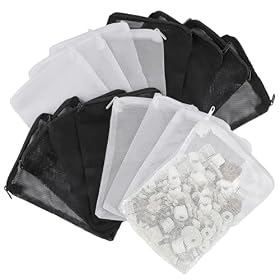
Use a media bag if needed. Small pieces can be contained in a filter-media bag, which makes removal and rinsing easier.
Keep the media submerged when possible. Avoid allowing biological media to dry out during maintenance.
Rinse with removed aquarium water. Chlorinated tap water can harm beneficial bacteria. Do not scrub the media aggressively.
Do not replace all established media at once. Add new media gradually when practical, especially if the aquarium is fully stocked.
Follow the filter and media manufacturer’s instructions if they differ from these general guidelines.
Does Matrix remove nitrate?
Matrix may support some low-oxygen bacterial activity inside its pores under suitable conditions, but it should not be treated as a guaranteed nitrate-removal product. Nitrate control still usually depends on water changes, plant uptake, reduced feeding, appropriate stocking, and other methods suited to the aquarium.
If nitrate remains high after adding biological media, check the full system rather than assuming more media is needed. Test source water, review feeding, inspect stocking levels, and confirm that water changes are being completed effectively.
Can you use Matrix and ceramic rings together?
Yes. Using both is generally reasonable if the filter has enough room and flow. However, combining them does not automatically double filtration. The two media types perform overlapping biological roles.
A mixed setup can make sense when you already have established ceramic rings and want to add Matrix gradually, or when different filter compartments make it convenient to use both. If space is limited, choose one effective biological medium and reserve room for mechanical filtration instead of filling the entire filter with biological media.
Maintenance and replacement
Biological media usually does not need frequent replacement. Rinse it only when flow is reduced or the media is visibly coated with debris. Always use removed aquarium water for rinsing, and avoid replacing all biological media during the same maintenance session.
Replace media if it is crumbling, permanently clogged, contaminated by an inappropriate chemical, or no longer fits securely in the filter. If the filter’s flow has dropped, first inspect the intake, impeller, sponge, tubing, and media for blockage. Replacing biological media will not fix a clogged pump or dirty mechanical stage.
Bottom line
Choose Seachem Matrix when compact, porous biological media is the priority, particularly in a smaller filter chamber or a higher-bioload aquarium. Choose ceramic rings when you want a simple, flexible biological medium for a larger filter basket or an existing setup.
For a healthy established aquarium, either can work well. Correct placement, adequate flow, preserved beneficial bacteria, effective mechanical filtration, and reasonable stocking matter more than choosing one media type as universally superior.
FAQ
Is Seachem Matrix better than ceramic rings?
Not in every aquarium. Matrix is often attractive when filter space is limited and highly porous media is desired. Good-quality ceramic rings can provide effective biological filtration when used with adequate flow and maintained properly.
Can Seachem Matrix and ceramic rings be used together?
Yes. They provide similar biological functions and can be used together, but combining them does not automatically double filtration. Make sure the filter still has enough room for mechanical filtration and unrestricted water flow.
How often should Seachem Matrix or ceramic rings be replaced?
Neither normally needs frequent replacement. Rinse the media gently in removed aquarium water when it becomes dirty or restricts flow. Replace it only if it is damaged, permanently clogged, contaminated, or no longer fits the filter.
Should biological media go before or after the filter sponge?
Biological media generally works best after mechanical filtration. A sponge or pad placed first catches debris and helps keep Matrix or ceramic rings from becoming clogged.
Will Seachem Matrix lower nitrate?
It may support some nitrate-reducing activity under suitable conditions, but it should not be treated as a guaranteed nitrate-removal solution. Water changes, stocking, feeding, plants, and overall aquarium maintenance remain important for nitrate control.