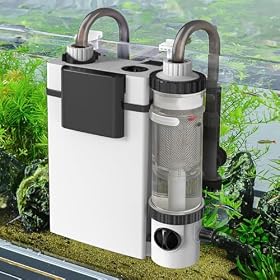
A surface skimmer can remove film and floating debris from the top of an aquarium while your HOB filter handles normal mechanical and biological filtration. Check intake compatibility, flow control, and livestock safety before buying.
Surface skimmer add-on for a HOB
A surface skimmer add-on for a hang-on-back (HOB) filter pulls water from the aquarium’s surface, where protein film, dust, and floating debris collect. It can improve gas exchange and keep the surface clearer, but compatibility matters: the skimmer must fit the HOB intake, maintain a safe water level, and avoid trapping fish or shrimp.
What a surface skimmer add-on does
A standard HOB intake draws water from below the surface. A surface skimmer adds a floating intake or weir that removes a thin layer of water from the top of the tank. That is useful when you notice:
A surface that looks stagnant even though the HOB is running
The skimmer does not replace the HOB’s filter cartridge, sponge, or biological media. It changes where some of the water enters the filter. The HOB still needs its normal filtration media and must remain properly primed.
Check compatibility before buying
Intake-tube and connection size
Most add-ons connect to the HOB’s intake tube, but fittings are not universal. Compare the skimmer’s connector with the outside diameter and shape of your existing intake. A product that relies on a friction fit may not stay secure if the sizes are slightly different.
Avoid forcing a connector onto the intake. A loose connection can admit air, reduce flow, or allow the skimmer to detach and expose the pump to air.
Intake design
Some HOBs use a straight intake tube, while others use telescoping sections, strainers, elbows, or proprietary fittings. An add-on designed for a simple round intake may not fit a molded or unusually shaped intake without a suitable adapter.
If the manufacturer lists compatible filter families or intake diameters, use those measurements rather than assuming that all HOB filters use the same size.
Water depth and tank rim clearance
The floating skimmer needs enough room to move with the water level while remaining below the tank rim. Check that:
The HOB sits securely on the aquarium rim
The skimmer does not press against the glass or decorations
Evaporation will not quickly lower the water below the safe intake level
The float or weir can move freely
A skimmer that hangs up on the rim or becomes partially exposed can draw air and make the HOB noisy.
Product prices and availability are accurate as of the date/time indicated and are subject to change. Any price and availability information displayed on Amazon.com at the time of purchase will apply to the purchase of this product.
Features that affect the buying decision
Adjustable surface intake
An adjustable skimmer lets you control how much water comes from the surface compared with the lower intake. This is helpful if the surface intake is too aggressive or if you need more circulation from deeper water.
Emergency or secondary intake
Some designs include a lower intake or overflow opening. This is valuable because the HOB can continue drawing water if the surface level drops slightly or the floating opening becomes obstructed. Without a secondary intake, evaporation or a clogged screen can cause air ingestion.
Protective screen or guard
A fine guard helps keep fish, shrimp, snails, and large debris out of the intake. However, very fine screens clog faster, particularly in tanks with plants, floating foods, or heavy bioloads. The safest choice is a guard appropriate for the smallest livestock in the aquarium, with regular cleaning included in your maintenance routine.
Flow restriction and clog access
The skimmer should be easy to remove and clean. Surface film and debris can collect quickly around a small opening, reducing flow. If cleaning requires dismantling the entire HOB intake, routine maintenance becomes more difficult and is more likely to be skipped.
Air-control or anti-vortex design
A good surface skimmer should not form a persistent vortex that pulls air into the intake. Look for a design that keeps the pump supplied with water as the level changes. Any product that causes repeated gurgling, spurting, or loss of prime is not operating correctly.
Product prices and availability are accurate as of the date/time indicated and are subject to change. Any price and availability information displayed on Amazon.com at the time of purchase will apply to the purchase of this product.
How to install one safely
Turn off or unplug the HOB. Do not reach into the intake while the pump is running.
Clean the existing intake. Remove algae and debris so the new connection seats fully.
Attach the skimmer according to its instructions. Do not use an improvised connection that can detach inside the tank.
Position the floating intake. It should move freely and remain level at the surface.
Fill the aquarium to the normal operating level. Account for the water displaced by gravel, decorations, and equipment.
Restart the HOB and watch the intake. Confirm that it draws water without creating a large vortex or pulling air.
Check the livestock. Make sure small fish, shrimp, and snails cannot enter or become pinned against the guard.
Observe the filter for several minutes. Listen for rattling, grinding, or repeated gurgling, and verify that water continues returning normally.
Keep the HOB’s normal intake protection in place unless the add-on instructions specifically require a change. Never operate a pump dry, even briefly if the manufacturer warns against it.
Product prices and availability are accurate as of the date/time indicated and are subject to change. Any price and availability information displayed on Amazon.com at the time of purchase will apply to the purchase of this product.
Troubleshooting common problems
The HOB becomes noisy after installation
First check the aquarium water level and make sure the floating skimmer is not drawing air. Then inspect the connection for a loose fit, confirm that the float can move freely, and clean the surface screen. If the noise continues, reduce the surface intake if adjustment is available or remove the add-on until the HOB runs reliably.
Flow is weaker than before
A clogged surface screen is the most common cause. Remove and rinse the screen in water taken from the aquarium, rather than untreated tap water if beneficial filter bacteria may be affected. Also check the intake tube, impeller area, and filter media for blockage. If the add-on is too restrictive for the HOB, use a model with a larger opening or a bypass intake.
The skimmer keeps sucking air
Top off the tank to the normal level and check whether evaporation is occurring faster than expected. Make sure the floating part is not caught on the glass, rim, plants, or décor. If it still exposes the intake during ordinary water-level changes, the design may not suit the tank or HOB.
Fish or shrimp gather near the intake
Switch off the HOB and inspect the guard immediately. Add an appropriate pre-filter sponge or livestock guard only if it does not excessively restrict flow and is compatible with the skimmer. Very small animals may require a finer protective solution and more frequent cleaning.
The surface film remains
Confirm that water is actually passing through the surface opening and that the skimmer is not set too high or blocked. Clean the opening and check the HOB’s return flow. Surface film can also be encouraged by overfeeding, oily foods, inadequate agitation, or poor maintenance, so correct those causes rather than relying only on the add-on.
When a surface skimmer is not the right choice
A surface skimmer may be unnecessary if the HOB already creates enough surface movement and the aquarium has no persistent film. It may also be a poor fit for tanks with very small fry, delicate shrimp, heavy floating plants, or large daily evaporation unless you can protect the intake and maintain the water level.
If your HOB is old, losing prime, or struggling with normal flow, fix or replace the filter before adding a skimmer. An accessory cannot compensate for a failing impeller, damaged intake, cracked tubing, or an undersized filter.
For persistent film, unusual electrical noise, overheating, or a filter that repeatedly runs dry, unplug the equipment and follow the manufacturer’s instructions. Replace damaged electrical equipment rather than attempting an improvised repair.
Bottom line
Choose a surface skimmer add-on only after checking the HOB intake diameter, tank rim clearance, water-level range, and livestock protection. The most practical design has a secure connection, an adjustable or bypass intake, an accessible guard, and enough capacity to avoid pulling air as the water level changes. Clean the surface opening regularly and monitor the HOB after installation.
FAQ
Can any surface skimmer attach to any HOB filter?
No. HOB intake tubes and fittings vary in diameter, shape, and connection style. Check the add-on’s compatibility list and measure the intake before buying.
Will a surface skimmer replace my HOB filter media?
No. It changes how water enters the HOB but does not replace mechanical, chemical, or biological filter media. Continue maintaining the filter according to its instructions.
Can a surface skimmer harm shrimp or small fish?
It can if livestock can enter the intake or become trapped against the guard. Use suitable intake protection, monitor the aquarium after installation, and choose a finer guard when appropriate without restricting flow excessively.
How do I stop a surface skimmer from sucking air?
Top off the aquarium, make sure the float moves freely, clear the screen, and inspect the intake connection for leaks. If the problem continues during normal evaporation, use a design with a secondary intake or remove the skimmer.